
 Posts
Posts


Most fans of epic movies or the works of J.R.R.Tolkien are probably familiar with the new Hobbit moving coming out this December. You've probably seen this trailer for it, as well.
What you probably haven't seen is this very old animated version of the story. The whole thing is less than 12 minutes long. It is fairly entertaining in a nostalgic kind of way, though it bares about as much resemblance to the actual story of the novel as the popular Nativity Story does to the Biblical accounts.
I was suddenly inspired to put together a movie-type poster for my version of the League of Extraordinary Gentlemen, since all of the characters I chose have been featured in movies. This is the best I could cobble together in about an hour.

The characters are from left to right: Frankenstein's Monster, The Artful Dodger, Sherlock Holmes, Red-Handed Jill, and The Phantom.
What do you think? Any advice on digital image manipulation would be welcome. ^_^

The original League presented in the comics consists of Allan Quatermain (King Solomon’s Mines), Captain Nemo (20,000 Leagues Under the Sea), Dr. Jekyll (The Strange Case of Dr. Jekyll and Mr. Hyde), The Invisible Man (The Invisible Man), and Mina Murray (Dracula). The movie added the characters of Dorian Gray (The Picture of Dorian Gray) and Tom Sawyer (The Adventures of Tom Sawyer).
So, I got to thinking about this idea and decided to assemble my own League. Here are my picks and a little information on how they would contribute to the team.
Sherlock Holmes (The Adventures of Sherlock Holmes)
After the murder of Dr. Watson during the course of one of Holmes’ investigations, the brilliant detective falls into a deep depression and is completely overtaken by his cocaine habit. He becomes even more of a recluse, turning away all cases and calls for aid. Finally, in
The unquestioned leader of the group, Holmes would use his logic and investigation skills to identify their opponents, deduce their plans and devise effective countermeasures.
The Artful Dodger (Oliver Twist)
The most notorious thief London’s ever know, there isn’t a place or a pocket Jack Dawkins can’t get into and out of without getting caught. That is, until he tries to steal the crown jewels. He is finally arrested while attempting to escape
The Artful Dodger is the team’s sneak, using his skills for covert missions to infiltrate enemy strongholds or misappropriate enemy resources.
Frankenstein’s Monster (Frankenstein)
Following clues from the letters of Captain Robert Walton, Sherlock Holmes tracks down the monstrous creation of Dr. Victor Frankenstein deep in the
Frankenstein’s monster is the team’s muscle, using his brute strength to go head-to-head in combat with their toughest opponents.
Red-Handed Jill (Peter and Wendy)
On the eve of her eighteenth birthday, Wendy Darling yearns to escape pressures of growing up. To her surprise and delight, Peter Pan appears again at her bedroom window and whisks her away to Neverland. While this is exactly the escape she was looking for, she quickly finds herself disenchanted with Peter’s immature bravado. She soon falls in with the pirates, who are have been lacking a firm leader since the death of Captain Hook. Before long, she takes up her pirate name, Red-Handed Jill, and leads the pirates in a war against the Lost Boys. Peter is heartbroken by the betrayal, and Neverland begins to wither under the pirate onslaught. As the pirates and the Lost Boys battle to a stalemate, Jill realizes the destruction she’s brought to Neverland and feels remorse. She offers a truce, and as penance, leaves Neverland with the rest of the pirates, never to return again. Back in
Red-Handed Jill has a sharp tongue and a sharp blade. She also has a crew of loyal buccaneers at her command and a rogue fairy as her companion. Her flying galleon, the Jolly Roger, provides transportation for the League.
The Phantom (The Phantom of the Opera)
Searching for more extraordinary people to round out his team, Sherlock Holmes investigates the great fire at the Paris Opera House and rumors of the opera ghost that once haunted the place. Through an interview with a ballerina named Meg Giry, Holmes learns that the phantom was actually a deranged genius named Erik, and that he survived the fire and escaped
The Phantom’s cunning is almost a match for Holmes’, but his expertise lies in devising traps and ambushes for their opponents. He is also an inventor, a magician, and a ruthless combatant.
Those are my picks, along with some rough ideas about how each of them would end up joining this elite team of crime fighters. Just for fun, do you have any thoughts on this concept? What fictional characters would you choose for your own League of Extraordinary Folks?
Just as a creative diversion, I decided to try casting the main characters of my fan novel Star Wars: Aspirations. I'm still uncertain if these are the actors and actresses I would actually choose in the hypothetical situation that my story should be made into a movie, but these are the ones I'm leaning towards right now.

Emma Watson as Rani Dashel
Honestly, I've never seen her in anything, so I can't really judge her acting abilities. She has kind of the look I'd imagine for the character, though, and she's a good age for the part. With a few adjustments in makeup I think she could easily portray the very young Rani in the beginning of the story and the more adult Rani later on.
Chris Pine as Wess Nayne
In Star Trek he played James Kirk as an intelligent man with surprising depth of character. It's kind of funny, but one of the things I was looking for here was an actor who could look good with a scowl. I don't really picture Wess smiling much. Chris looks a tad young for Wess, but he's actually about the right age for the character. With a little bit of stubble I think it could work.
Kate Beckinsale as Kalina Sah
She's played tough, butt-kicking characters before. I think she would be totally cool as the strong-willed Jedi Master.
Milo Ventimiglia as Marcus Jrent
His character on Heroes is incredibly kind and sincere - not what you'd expect for Marcus. But Milo is a good actor and I think he could definitely turn on the charm to play this dashing scoundrel. Besides, there is a bit more sincerity to Marcus than it might at first seem.
Cate Blanchett as Deela Tarule
This role requires a more mature actress with beauty and class. Having played royalty on more than one occasion is indicative of the amount of class she has.
Robert Duvall as Riv'var Tal
I picture Riv being completely computer generated in a live-action movie, in order to do the alien justice. So, I was mainly looking for someone to provide his voice. It needs to be an older man with a sort of gruff voice, but he needs to have a tough, grandfatherly feel as well. The voice would then probably be slightly digitally enhanced to add even a little bit more of a growl to it. Duvall can certainly play an eccentric character, too, which further qualifies him for the role.
Corry Edwards as Tefo
Like Riv'var Tal, Tefo would probably be either completely computer generated, or perhaps a midget in a suit. Either way, I was simply looking for someone to provide a voice. Corry Edwards did the voice of Twitchy in Hoodwinked. I think if you toned down the speed and pitch of that character's voice by about half, that's roughly what I imagine Tefo would sound like.
Hugo Weaving as The Imperial Inquisitor
He doesn't show up until about two thirds of the way through the story, and even as far as Chapter 18 he hasn't been named, but aside from the characters' inner demons, the Imperial Inquisitor is the major villian of Aspirations. He embodies everything that Rani and Wess seek to oppose. Hugo Weaving can do creepy and intimidating, which is exactly what this character needs.
So, those are my choices as of now for the main cast of Aspirations. What do you think? Are there other actors or actresses that you think would fit the roles better? Let me know by posting a comment.

Has anyone else heard of this? I just found out about this movie the other day. It is based on a graphic novel by the same name. The story has been described as being what you might have “if Batman were written by H. P. Lovecraft.” Lovecraft – an author of weird fantasy, science fiction, and horror during the 1920s and 1930s – is most famous for his Cthulhu mythos.
In late 2002 a very unique show aired on television called Firefly. This sci-fi show featured strong western motifs as it followed the lives of a crew of renegades operating a mercenary ship on the fringes of space. The stories were well told, the characters had depth, and the dialog was tightly written. Unfortunately, the show was short lived at only fourteen episodes. A movie sequel called Serenity was released in 2005, and the story has also been expanded through two graphic novels. Even with the relatively small extent of this franchise, its creators have been able to depict a setting rich in flavor and texture. They've provided just enough for a creative fan to build on and imagine their own stories set in the 'verse of Firefly and Serenity.
That's why it was very cool that they released the Serenity Role Playing Game. As a fan of the setting, and of roleplaying, a couple of years ago I got some of my siblings and friends together to play. We created our own characters to crew our own Firefly-class starship and had some pretty cool adventures together. A few months ago, I got to thinking that it could be very fun and interresting to turn our adventures into a series of short stories, and even expand on them. I'm calling this new "spin-off" series Flyin'. This title is taken from an exchange of dialog between two characters in the pilot episode of the original show.
Simon: Are you always this sentimental?
Mal: I had a good day.
Simon: You had the Alliance on you, criminals and savages... half the people on the ship have been shot or wounded including yourself, and you're harboring known fugitives.
Mal: We're still flying.
Simon: That's not much.
Mal: It's enough.
To me, that exchange summerizes pretty well the main theme of the show. It's about people living rugged, dangerous lives, and barely scraping by. For many of them, if they're still flying that's good enough.
So, as I set out to begin writing these stories, I found that I was having some difficulty getting a handle on four of the characters I would be writing about, since they were invented by my siblings and friends while we played the roleplaying game, rather than being my own creations. I got the idea to draw illustrations of each of the seven main characters, and I've found that in doing so I've been able to get a better grasp on the characters. So, here below I'm sharing what might be considered an ad of sorts diplaying the main cast of my stories along with the title of the series (click for full view).

Way back in April, I did an article called "Take 2! Another Take on Titles". That article presented poster images along with a brief description of a fictitious television show. Basically, I took the title of an existing TV show and tried to re-imagine what that show might be based solely on the title. Recently, I've been watching a lot of the Batman cartoon from the 90s, so this time I've taken the titles of (relatively) recent movies and re-imagined them as spin-offs of the Batman franchise. Click on the images to enlarge them. This movie deals with a very young Bruce Wayne, picking up directly after his parents are murdered. It shows his troubled childhood, as he deals with his grief and guilt which eventually turn into bitterness. All the while, his family's butler Alfred struggles to understand the young boy and become a stabilizing force in his life.
 This spin-off follows the events of The Dark Knight. Former District Attorney Harvey Dent survived his fall at the end of that movie. The trauma from losing Rachel and the severe burns he suffered has caused a split personality to emerge. Now, as Two Face he goes about taking over the criminal underworld of Gotham City and building his own empire of crime. However, the real Harvey, a man who upheld justice above all else, is still struggling to regain control. Batman, Gotham City and Harvey Dent are all headed towards one last chance at redemption.
Ducard: If you make yourself more than just a man, if you devote yourself to an ideal and if they can't stop you, you become something else entirely.
Bruce: Which is?
Ducard: A legend, Mister Wayne.
So, there they are. What do you think? Please let me know by leaving a comment below.

Star Trek is a 2009 film that offers a new take on the classic series. The film features time-traveling Romulans from the future causing events that create an alternate timeline. This allows the movie to go back and explore the early adventures of the original show’s characters without facing continuity restraints. The film focuses primarily on Kirk and Spock, showing bits of their early lives and how each of them ended up joining Starfleet. Things quickly escalate when Starfleet is called on to aid the planet Vulcan – a mission that goes sour quickly, leaving many Starfleet vessels destroyed and the enterprise without a captain. The fledgling crew of the enterprise, most of whom are still cadets, must pull together to overcome the Romulan threat.
This film was very well written. It captured a sense of epic adventure and heroism that Star Trek often seems to lack. They also did a good job writing and casting the characters. I felt like I could be watching younger versions of the original cast. This film actually made me like Kirk. I didn’t much care for him in the original series and movies. It also gave a new perspective on Spock, my favorite character from the original show, which only made him more intriguing. I like how they made Spock’s repressed emotions an actual plot point, rather than just a minor background element.
This film definitely revived the franchise for me. I’m looking forward to a sequel.
Roleplaying
Because of my obsession with roleplaying games, I tend to watch most movies and shows with an eye for what I could take from it and apply to gaming. Here are some ideas from Star Trek.
Space Exploration Adventures: This movie got me excited for the idea of playing an RPG about space exploration adventures. I’ve been working on an RPG of my own for a while now that would essentially be Star Trek with the branding removed. Some of the things I like about Star Trek that could make for interesting roleplaying are the galactic politics, the alien cultures, and the random encounters made while exploring new regions of space.
Character Driven Plot: To a large extent, the plot of Star Trek is tied very closely to the characters involved. I think the film did a great job of making the characters matter to the overall story. This could/should be done in any RPG, but this film made me a little more alert to strive for that kind of character involvement in RPGs.
 X-Men Origins: Wolverine is a prequel to the X-Men movie trilogy explaining the origins of the character known as Logan or Wolverine. The majority of the story takes place 10-20 years before the events of the first X-Men film. The movie explains the relationship between Logan and Sabretooth, shows Logan’s involvement with Colonel Stryker and the Weapon X program, and reveals how Logan lost his memories. One minor detail I enjoyed was an explanation for why Logan adopted the name Wolverine.
I went into the movie expecting a lot of action and only enough story to link the various action scenes together. I was pleasantly surprised that the movie had a fairly good plot with a couple of twists and surprises throughout. The writing and acting was pretty good, and the casting was well done. Hugh Jackman reprises his role as Wolverine, and his portrayal of the character was spot on. While the movie featured a number of new characters, for me the most memorable was Wade Wilson portrayed by Ryan Reynolds. The only character I was somewhat disappointed with was Gambit. In the film he didn’t have enough of a Cajun accent to do the character justice.
My biggest complaint against the film is the special effects. Some of the effects were so obviously fake it was distracting. The most notable example I recall is when Sabretooth drags his claws along the hood of a truck and rends the metal as he goes. The tears in the metal were very obviously drawn in.
Overall, the movie delivered exactly what I expected and a little bit more. I’d say it was about on par with X2 in pretty much all respects. I wouldn’t mind seeing the sequel or the Deadpool spin-off, both of which have already been confirmed as in-production.
Roleplaying
Because of my obsession with roleplaying games, I tend to watch most movies and shows with an eye for what I could take from it and apply to gaming. Here’s an idea from X-Men Origins: Wolverine.
Playing an Origin Story: When playing a long running RPG campaign, it could be fun to take a session or two to explore each character’s origins. This would especially be true in playing a superhero RPG, but it could really work in any RPG that brings a number of characters with very different and involved backgrounds together. I think you would want to play a few sessions first in the setting’s “present”, but then periodically play a session as sort of a “flashback”. During such origin stories, the other players could take on the roles of new characters that are important to the featured character’s background. It could be an opportunity for character development and a chance for everyone to try something a little different.
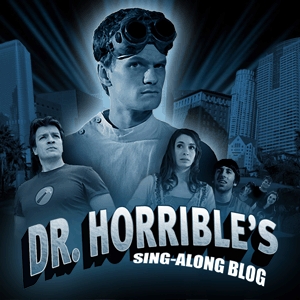
Dr. Horrible’s Sing-Along Blog is a short musical film about a super villain’s rise to power. The film consists of three acts, each about 14 minutes long, which were originally released online before being compiled for the DVD release. Dr Horrible was created by Joss Whedon, creator of several popular television shows including Firefly. The story focuses on Dr. Horrible’s efforts to be accepted into the elite criminal organization called the Evil League of Evil, and on the love triangle involving himself, a social worker named Penny, and Captain Hammer – his superhero nemesis.
This film is pure comedic genius from concept to execution. The songs are clever and well written. This film was produced independently, but looks professional. The writing team penned the musical during the WGA writers' strike. The idea was to create something small and inexpensive, yet professionally done, in a way that would circumvent the issues that were being protested during the strike. This effort was a success, and Joss Whedon has announced that a sequel is in the works.
Roleplaying
Because of my obsession with roleplaying games, I tend to watch most movies and shows with an eye for what I could take from it and apply to gaming. Here are some ideas from Dr. Horrible’s Sing-Along Blog.
Playing Villains: Dr. Horrible presents a villain who is relatable and appealing as a character. It would definitely not become the norm for me, but it makes me think it might be amusing to play a game where all of the player characters are villains. Necessary Evil, a setting for the Savage World RPG does this. Another fun idea would be to play a Star Wars campaign where all of the player characters are Sith in the Old Republic or Legacy Era.
Sing-Along Session: OK. Just once this has to happen. For one session of an ongoing game, everyone has to sing. Minor bits of dialog can be spoken, but the majority of it must be sung. That would be very entertaining.
Superman: Doomsday is a direct-to-video animated film about the supposed death of Superman. The story is loosely based on the comic book story arc: The Death and Return of Superman. The plot begins with Lex Luthor’s company, LuthorCorp, accidentally digging up an alien spaceship buried on earth thousands of years ago. The ship opens, releasing a creature called Doomsday, the ultimate killing machine. Doomsday was created as the ultimate soldier, but he couldn’t tell friend from foe so he was conveniently disposed of on Earth. Before long he makes his way to Metropolis where Superman must intervene.
Here is where the biggest mistake in the plot occurs. After a lengthy and brutal battle, Superman finally destroys Doomsday by grabbing him, flying him out into space, and then slamming him back down into the Earth. The reentry through the atmosphere and the final impact kill both Doomsday and Superman. Question: Once Superman got Doomsday beyond the Earth’s gravitational pull, why didn’t he simply hurl him into the sun? There was no indication that Doomsday could fly, so even if the sun didn’t kill him he would have no way of getting back to Earth. I guess Superman just didn’t think of that, which is why Superman will never be as cool as Batman. Batman would have thought of it.
After Superman’s death, we see a little of what the DC Comics universe would be like without him. Crime rates skyrocket, and super villains stalk Metropolis with no one to stop them. Lois Lane and Martha Kent mourn his passing. Then, as suddenly as he was gone, Superman returns. Digging his way out of his grave, he flies to Lois’ rescue as she faces death from the Toyman. All is not as it seems, however. It’s quickly revealed that Lex Luthor secretly removed Superman’s body from his grave and clone him. The returned Superman is actually Lex’s evil clone. For now he is impersonating Superman well, fighting crime and protecting the citizens of Metropolis, but at the same time he is doing the bidding of Lex Luthor.
While the clone Superman genuinely wants to protect Metropolis, he lacks the strong moral center of the original Superman. After seeing a news report that Toyman, one of Superman’s villains, has killed a small child, Superman kills the criminal instead of turning him over to the authorities. Lois Lane becomes suspicious and begins investigating Luthor. She discovers the true nature of the returned Superman, and that Lex is cloning an army of Supermen. The clone Superman has rid himself of Luthor’s control and destroys the unfinished clones along with the cloning facility. By now, however, the government has become concerned about Superman’s recent lack of discretion, and sends the military to apprehend him. The attempt is futile, of course, and it seems that the clone Superman’s reign of terror is unstoppable. Until… The REAL Superman returns from the grave. As it turns out Superman is truly invulnerable and he has merely been in a death-like coma while he’s been gradually recovering. After being resuscitated in his Fortress of Solitude, the real Superman flies to do battle with the clone Superman, and saves the day.
Other than that one HUGE error in the plot near the front of the film, the rest of the story is fairly interesting and coherent. The portrayal of Superman and the other characters was appealing, especially the clone Superman as a foil for the real Superman. Lois Lane almost did more in this movie than Superman actually did. The art was in the action-cartoon style typical of DC’s superhero cartoons. It wasn’t anything exceptional, but it wasn’t bad either. This movie was rated PG13, which is unusual for an animated superhero film. However, the action was quite brutal at parts, with a fair amount of onscreen animated blood. There was also some PG13 rated language that you wouldn’t expect in a Superman cartoon. This Superman may be animated, but it is definitely not a kids’ movie.
Roleplaying
Because of my obsession with roleplaying games, I tend to watch most movies and shows with an eye for what I could take from it and apply to gaming. Here are some ideas from Superman: Doomsday.
The Altruistic Villian: The clone of Superman genuinely believed that he was doing what was best for Metropolis, even in fighting the real Superman at the end. It reminded me of the value of the misguided villain, who wants to do good but goes about it the wrong way. I’ll have to use that archetype more when I’m the GM for a game.
The Danger of Being Invincible: Superman is one of those characters who, in my opinion, are just too powerful. Stories about Superman have a major weakness. The only way to effectively threaten Superman is to resort to a gimmick, like Kryptonite. This means that you either lose the tension in your story, or the gimmick gets old very fast. The only way this kind of character seems to work is if you plan for them to have only a finite story arc before moving on, such as the major villain whose one weakness the heroes must discover before they can finally destroy him. This isn’t so much inspiration for roleplaying, but rather a warning for GMs: Don’t let characters get too powerful if you expect to keep them around.

 In the Land of Women will be my first truly negative review on this blog. The premise for this drama sounded like it might have potential. The movie starts out with Carter Webb, a young man from Los Angeles, being dumped by his girlfriend. Wanting to get away from things, and learning that his grandmother thinks she’s dying, he travels to Michigan to care for the elderly woman. There he befriends the Hardwickes, a woman and her two daughters who live across the street. Their relationships move everyone involved to gain a new perspective on their lives.
So, that’s the basic premise, but the film fails to deliver. I was going to write a synopsis of the movie in a paragraph or two, but I changed my mind. It’s not worth writing. What happened? It really doesn’t matter. The characters are underdeveloped and generally unappealing. The family drama falls flat somehow, and most of the relationships that develop seem awkward or unrealistic. I don’t see how the main character makes any significant changes by the end of the story, or how he’s really affected by the things he experiences. It’s really hard to say what the movie was trying to convey. It did absolutely nothing for me. It wasn’t touching, or funny, or anything. It wasn’t horrible, it just wasn’t good. The only thing I really enjoyed was one scene where the teenage daughter of the family next door is painting in her basement. She paints a neat picture on this really big canvas. It was a very minor scene, but it made me want to paint again.
Roleplaying
Because of my obsession with roleplaying games, I tend to watch most movies and shows with an eye for what I could take from it and apply to gaming. Sadly, I found nothing inspiring about In the Land of Women.
 This is a belated review as I saw Steam Boy most recently almost a month ago. Steamboy is an anime movie directed and co-written by Katsuhiro Otomo, who directed the anime film Akira (I’ve never seen it, but it’s famous). Steamboy is pretty much my only exposure to the steampunk subgenre of science fiction.
The story focuses on a family of scientists in Victorian England who develop incredible steam powered inventions. James Ray Steam’s father, Edward, and grandfather, Lloyd, are working together on a secret project in America, but they split ways after an accident that leaves Edward severely injured from a blast of steam. A short time later, back in England, James receives a mysterious package from his grandfather. The package contains a steel ball, about the size of a basketball, and a letter from his grandfather telling him to protect it from a company called the O’Hara Foundation. Only a short while later, agents of the Foundation attack James’ house in an attempt to steal the Steamball, which contains super-compressed steam, thus launching an action-packed thrill ride as everyone battles for this new energy source. The O’Hara Foundation, now allied with James’ father, wants it to power new military weapons that they aim to sell to any nation who can afford them. The British government want it for their own ends. James simply wants to make sure that his family’s invention is used for good and not evil.
The movie had good animation, with lots of computer enhanced art. The character designs were somewhat bland to my eye, but were clean and a little more on the realistic side of anime. Overall, the movie reminded me a bit more of Disney-style animation than of typical anime. One of the most interesting visual aspects of the movie was the mechanical designs. The high-tech vehicles were steam-powered and looked like something that could come from the industrial revolution. I especially liked how they used series of moving magnifying lenses to mimic the functions of cameras and video screens. The only major drawback to the art that I noticed was that many of the interior scenes seemed very dark, which made it difficult to really appreciate the interesting interiors of some of the buildings.
The music score was OK, but not really exceptional. The voice acting for both the original Japanese language track and the English dub were good, and the English dub featured the voices of some well known actors including Anna Paquin, Patrick Stewart, and Alfred Molina. In some parts, though, the voices seem a bit overwhelmed by the music and sound effects. It would have been nice if they hade made the dialog track just a bit louder.
Overall, it is an interesting movie. It has good quality animation and some neat ideas. One minor detail of the film that I really enjoyed was the credits. As the credits roll at the end of the film, a slideshow plays in the background that gives hints to how the story might continue, with James Ray Steam using his steam-powered gadgets to become a high flying war hero.
Roleplaying
Because of my obsession with roleplaying games, I tend to watch most movies and shows with an eye for what I could take from it and apply to gaming. Here are some ideas from Steamboy.
Alternate History: Steamboy presents an alternate history in which the Victorian era achieves technology far in advance of the real industrial revolution. I know I’ve seen other examples of this, and it’s a fun creative exercise to ask what history might have been like if certain scientific discoveries were made earlier. Using this in an RPG could be a neat way to add a little different flavor to the typical Sci-Fi game.
Family Conflicts: Most of the story in Steamboy revolves around three generations of scientists in the same family, with two of them ending up on opposing sides of the main conflict, and the youngest one having to choose which one to follow. I’ve used family connections to add to the drama in Dogs in the Vineyard, but it might be interesting to use this tactic more often in other games.
Back in November, I said that my weekly time log posts would become monthly time log posts, and I haven't posted about my time log project since. Well, I've still been logging how I use my time, and I thought I'd post an update regarding the month of February.
Last month I spent 130 hours on theocratic activities. That includes 94 hours working with the RBC #10 in Oviedo. I'm really happy that my time spent on theocratic activities has moved to first place (after sleep that is).
Next I spent 76.5 hours on secular work. With the holiday season well behind us my work as dropped to part time hours, which I'm fine with for now. I had been hoping to gain full-time employment this year, but I've changed my attitude somewhat and am planning on putting off working full-time in favor of trying to regular pioneer.
I spent 34 hours reading. That isn't entirely accurate. Because a lot of my "work" with the RBC involves waiting around for materials to be delivered, I actually spent quite a few hours reading while I was there. These 34 hours represent time devoted solely to reading.
Creative pastimes, such as working on this blog and my wiki, creative writing, art, game design, and RPG prep, received 47 hours of my time. I'm pretty happy with that. I don't feel like that's an exorbitant amount of time, and I think I've accomplished a fair amount on my various projects.
Entertainment took up another 47 hours. This includes watching movies and shows, playing card games, board games, role-playing games, and sports.
Lastly, I spent 5.5 hours on housework, errands, and shopping.
Overall, I'm very happy with how I spent my time last month. I'm actually very happy with my life in general. Not that everything is going perfectly, but for the first time in a long time I feel like I'm right where I need to be in life, doing what I need to be doing. And that makes the bumps in the road a lot easier to put up with.
 Origin: Spirits of the Past is something of a misnomer for this anime feature film. The story has little to do with the origin of anything and it contains no spirits. The original Japanese title for the film is Gin-iro no Kami no Agito, which literally translates to Agito the Silver-Haired, and makes a lot more sense for this movie.
The story takes place 300 years in the future. Scientists experimenting with genetically engineered plants on the moon accidentally unleashed a new species of intelligent plant-life that shattered the moon and traveled to the Earth. This caused a disaster that wiped out civilization as we know it and covered much of the planet with a dangerous living forest. The surviving humans that appear in the movie are split into two different factions. The inhabitants of Neutral City try to adapt to life after the apocalypse and live in harmony with the forest, while the militaristic nation of Ragna wants to return the planet to the way it was before.
The main character is a boy named Agito. His father helped build Neutral City. While trespassing in the forest Agito discovers Toola, a girl from before the disaster, frozen in a stasis cell. He wakes her up and brings her back to the city. It turns out that she happens to be the daughter of the scientist who developed the new plant-life. The scientist also built a failsafe device that could destroy the new forest, and Ragna wants Toola’s cooperation in activating that device. Before long, Agito asks the forest for aid in rescuing Toola from Ragna. The forest grants him some of its power, turning him into a silver-haired, “enhanced” human with incredible strength and speed. That’s where the Japanese title comes in.
Overall, this was a pretty cool sci-fi flick. The story is rather spotty at parts, and there wasn’t really enough time for any significant character development, but the setting was pretty intriguing. It reminded me a bit of a post-apocalyptic setting of my own that I’ve been tossing around in my head for a while. While the soundtrack was nothing special, the animation was superb. It was every bit of the level of sophistication and beauty I’ve come to expect from Gonzo. Some of the visuals were thoroughly amazing from their concept to their execution. The intro sequence shows an awesome looking plant-dragon creature descending on the Earth. The scenes around Neutral City and deep in the forest are cool too. You can see how the artists took familiar modern locales such as malls and movie-theaters, turned them over, aged them, and covered them in overgrowth to create a unique and compelling image of a post-apocalyptic jungle. The mecha designs for Ragna’s army were neat too. Their tech had a lot of style, but with an air of industrialist practicality. I wouldn’t call this one of my favorite movies, but it is definitely pretty, and it presents a lot of ideas to mine for my own projects.
Roleplaying
Because of my obsession with roleplaying games, I tend to watch most movies and shows with an eye for what I could take from it and apply to gaming. Here are some ideas from Origin: Spirits of the Past.
Post-Apocalyptic Setting: As I mentioned above, I’ve been tossing around some ideas for a post-apocalyptic setting of my own for about 3 or 4 years now. I’d love to develop an RPG off of this setting, and I think I just recently decided on what system to use with that project so I might actually begin work on it sometime soon. The two different factions in this movie relate very well to two of the factions I had in mind for my setting, and I’ll probably borrow some specific ideas from the film.
Building a City in the Darkness: I could almost picture an RPG about Agito’s father and the other pioneers who built Neutral City as a bastion of safety in a dangerous world. I think it would be cool to play a game where the PCs have to fortify a safe haven against the perils that encroach from all sides. The idea is to encourage the players to get invested in a locale rather than to be just passing through. A game like this could work in a huge variety of settings from fantasy to science fiction or anything in between.
Batman: Gotham Knight is the second Batman film in my DVD collection. It is an anime follow-up to Batman Begins, taking place before the events of The Dark Knight. The film runs a little over an hour and consists of six different animated shorts. Each short was written, produced, and animated by different people, but there are a considerable number of connections between them. In fact, having seen it a second time, I was actually surprised just how connected the six segments are. It could almost be one continuous story. Overall I liked the anime pretty well, but I’ll review each segment separately below.
“Have I Got a Story for You”
This segment has three kids telling about their encounters with the Batman in reverse-chronological order. Each story presents a different idea of what exactly Batman is in the eyes of those who witness him. This was an interesting idea, but I think it was an oversight to have the story take place in the daylight. It makes it harder to believe that the kids would mistake him for anything but what he is – a man in a suit – and besides, we know Bruce doesn’t operate as Batman during the day. The animation in this one wasn’t necessarily bad, but it was my least favorite. I just don’t care for the style.
“Crossfire”
This segment focuses on two detectives who are working closely under Gordon in Gotham PD’s new Major Crimes Unit. It connects with the previous segment by having these two cops take the bad guy that the kids witnessed Batman fight down to Arkham. It introduces Sal Maroni and The Russian, two rival mob bosses who will appear again in later segments. While dropping off the captured villain, the two cops argue about whether Batman is good for the city. One of them doesn’t trust Batman, the other does. On their way back from Arkham, they get caught in the crossfire of a street fight between the rival crime gangs and are rescued by Batman.
“Field Test”
Lucius Fox invents a new device for Batman’s arsenal. It generates an electro-magnetic pulse at the sound of a gunshot that will deflect bullets. Armed with this new tool, Batman forces Sal Maroni and The Russian together and then takes on both of them at once. This segment featured some of my favorite animation, including my favorite version of the bat-suit presented in this film. It was a unique and original design, without radically altering the basic concept. The story was also pretty interesting. It’s neat how Batman deals with the rival crime bosses, and the story also gives a good reason why Batman doesn’t have his “invincibility device” in future stories. Early in the segment, Bruce Wayne steals a PDA that will come into play in the last segment. Near the end of this segment a thug tosses his pistol into a gutter, which will come up again in the segment “Working Through Pain”.
“In Darkness Dwells”
The police respond to a riot in a cathedral where a cardinal was kidnapped by the villain Killer Croc. Batman meets with Gordon and the two cops from “Crossfire” before heading into the sewers in pursuit of the kidnapper. After a brief fight with Croc, he stumbles upon a cult of drugged lunatics following Scarecrow. Batman must prevent them from killing the cardinal. Nothing about this segment really stands out to me as note-worthy, though it wasn’t bad. It seemed a bit like a filler episode.
“Working Through Pain”
Picking up right after the last segment, Batman is still in the sewers trying to round up a few members of the Scarecrows cult. One of these shoots him in the stomach. As batman struggles against the pain of the injury, trying to get out of the sewers, he experiences flashbacks to previous experiences. Most of these revolve around his training under a woman named Cassanda, who taught Bruce a meditative technique for mastering pain. This segment has my favorite anime depiction of Bruce from this film. At the end, Batman discovers a cache of weapons in the sewers, a link to the earlier “Field Test” segment. Warning: This anime has some amount of blood throughout, but this particular segment has the goriest visuals, including an animated depiction of surgery being performed on a man without anesthesia. It’s probably not appropriate for children or those with weak stomachs.
“Deadshot”
A skilled assassin called Deadshot scores a contract to take out Gordon. Batman follows Gordon’s motorcade trying to intercept the killer. Early on, we see the cache of weapons Batman pulled out of the sewers in the last segment, and there are also several connections to the earlier “Field Test” segment. This story provides an interesting twist: Deadshot is really out to kill Batman and the threats against Gordon are just a means to flush him out. In my opinion, though, it fails to really address the significance of this. It’s the criminal underworld’s first direct counterstrike against the Batman, acknowledging him as their chief persecutor.
All together, I think Batman: Gotham Knight is a pretty entertaining watch. As an aspiring artist, and someone who watches a lot of animation, I enjoyed seeing the variety in the artwork. Most of it was very high-quality, even if all of it wasn’t to my taste. If you're interested, you can find a very good sampling of the artwork in this film here.
Roleplaying
Because of my obsession with roleplaying games, I tend to watch most movies and shows with an eye for what I could take from it and apply to gaming. Here are some ideas from Batman: Gotham Knight.
Making Connections: I liked how each segment of this film told its own story. But, they also made connections between the segments that an observant viewer could follow. This reminded me a lot of how RPG sessions can tend to be episodic sometimes, but even in that case a GM should try to make little connections here and there.
Eyewitnesses: In the first segment it was interesting how three different people give very different accounts of the same person. I think I ought to use that in a game sometime where the PCs are investigating an NPC that none of them have encountered yet.
Flashbacks: The segment “Working Through Pain” makes good use of flashbacks. In fact, most of the story in that segment takes place in the flashbacks. I’ve never tried incorporating flashbacks into an RPG, but I think it could be cool if it were done well.
I suppose I could have folded this article in with my review of Batman Begins, but the movie has so many good lines that I wanted to write a separate article.
"There are those without decency who must be fought without hesitation, without pity." "The training is nothing! Will is everything! The will to act."-Ducard
These sentiments really strike a cord with me. They fit well with the honor codes of Chivalry and Bushido that I admire. Ducard is one of my favorite characters in Batman Begins and I like how his philosophy, tempered with the kindheartedness of Bruce's father, really have a profound impact on Bruce's character. You can very easily see Ducard and Batman becoming allies if their methods were just a little more compatible. While I won't endorse literally fighting evil, there are times when we must do the right thing without hesitation. That's why Phinehas (Numbers 25:7-11) is one of my biggest Biblical heroes.
Alfred: Why do we fall, Master Wayne? So that we can learn to pick ourselves up.
Bruce: You still haven't given up on me, have you?
Alfred: Never.
This exchange says a lot about how we should view our own failings and those of others. Don't be discouraged, learn from your mistakes, and never give up on your friends.
"It's not who you are underneath, but what you do that defines you."-Rachel Dawes
I know, probably one of the cheesiest lines in the movie, but it still holds a grain of truth (or is that the truth about grains?). I also like how Batman later turns the line around on her. There are quite a few lines that get turned around in this movie, actually, including Thomas Wayne's last words being repeated later by Ducard. It's rather clever.
"Does it come in black?"-Bruce Wayne
Bruce Wayne's response to test driving the Tumbler. It's never a mistake to ask this about anything you like. Clothes, cars, anything. It kind of reminds me of Roger Smith (from The Big O).
What about you? Are there any lines from Batman Begins, or other movies, that really strike a cord with you?

I've begun watching all of my Batman DVDs in "chronological order". I watched Batman Begins last night, next I'll watch Gotham Knight, then I'll move on to Batman: The Animated Series, and finally Batman Beyond. Batman is my favorite superhero by far, and Batman Begins is an awesome portrayal of the character and his origin.
What I really like about Batman Begins is that it is a deep, character-driven story about one man's determination to become more than just a man - to become an elemental force of justice - and how he masters his own fear and anger to turn those against the criminal element that made him a victim. As Bruce Wayne puts it himself: "I seek the means to fight injustice. To turn fear against those who prey on the fearful." Unlike the majority of superheroes who are either born with their powers or obtain them by accident, Batman is a man who chooses the path of the superhero, and puts forth a tremendous amount of effort to become what he is.
Another thing I like about the movie is it's great writing and casting. Some of the dialog is just so fundamental to the image I have of the Batman character and mythos - it's cool to see how Alfred, Ducard, and even Rachel all helped shape Bruce Wayne’s identity. The acting in this film is superb, and I think they definitely hit the mark with their casting choices. Christian Bale makes a great Batman. He portrays the character and his personal struggles superbly. Michael Caine and Gary Oldman were perfect in their roles as Alfred Pennyworth and Jim Gordon. Gary Oldman is to Jim Gordon as J. K. Simmons is to J. Jonah Jameson (a better match could not be found in both character portrayal and physical appearance). Liam Neeson is also an actor I enjoy watching, and he was well cast for the role of Ducard. Katie Holmes did a fine job as Rachel Dawes, though the film's sequel showed that another actress could do just as well. Rachel Dawes was actually one of the things I like about the film. In what seems to be a continuing trend in superhero films, Rachel is more than just a love interest for Batman, but is an interesting character herself and plays an important role in Batman's fight against crime.
I think Batman Begins did a good job of making Batman believable. We could see how someone with Bruce Wayne's history and resources could become a crime-fighter. I liked how they even gave a convincing explanation for why such a character would choose to don a very theatrical costume with a bat motif. The "Tumbler" is the single most awesome and believable version of the Batmobile. As cool as it would be to play Batman in a movie, I think the best job in the production of this film went to the stunt driver who got to drive that sports-tank.
Roleplaying
Because of my obsession with roleplaying games, I tend to watch most movies and shows with an eye for what I could take from it and apply to gaming. Here are some ideas from Batman Begins.
Superhero Origins: Previously, when I played a superheroes game, we simply jumped right into the action at the point where the heroes were coming together to form a team, and skipped their individual origins. If I ever run a superheroes RPG again, I think it would be cool to tell character-driven origin stories for the superheroes involved.
What Makes a Character: In this movie we see various people and events that shaped Bruce Wayne's character. I think it is cool to play an RPG where characters experience considerable changes as the story unfolds. Dogs in the Vineyard's conflict resolution system makes this kind of character growth a built in function of the rules mechanics, but I think the same kind of character development can be accomplished in any game system, so long as the players make a conscious effort to produce it.
 This outstanding anime from Makoto Shinkai (the creator of Voices of a Distant Star and The Place Promised in Our Early Days), 5 Centimeters per Second uses thoughtful narration, beautiful artwork, and a complimentary musical score to tell a touching story of adolescent frustration. Through 3 separate acts, this short film tells a story about a boy named Takaki who is separated from his childhood sweetheart when her family moves away from Tokyo, and how he struggles to cope with that heartbreak on into young-adulthood. The film tells the story in a way that is very true to real life adolescence, and conveys self-defining moments in a way that gave me pause for reflection.
What I think makes this movie really special is how true-to-life it is. It isn’t as if the writer sat down to write a romantic tragedy and said: “Let’s come up with the most tragic set of circumstances we can.” No, instead the scenarios are just everyday scenarios that millions of people have experienced. The person you love moves away and there’s nothing you can do about it. The person you love is in love with someone else. Who hasn’t been in a situation like one of those? Because of this, you can really feel the characters' heartbreaks with them.
I think as adults it might be easy to dismiss the frustrated relationships of these characters as foolish, but you have to remember that to the adolescents involved, the situations are very real and immanent. I hope that adults who watch this film will be reminded of their own adolescent heartbreaks and be able to connect with a younger generation.
I think it’s interesting how the story ends. Without giving too much away, it says a lot about the value of letting go.
Roleplaying
Because of my obsession with roleplaying games, I tend to watch most movies and shows with an eye for what I could take from it and apply to gaming. Here are some ideas from 5 Centimeters per Second.
3 Act Narrativism: This anime is told in 3 distinct acts which each take a leap forward in time, and each move the narrative forward significantly. I think it would be interesting in a Narrativist game to play a story out in 3 separate acts this way, with a definite beginning, middle, and end. I’m not sure how well that would work, but it’s an idea I’ve thought about working into one of my games-in-design: Breaking the Limit.
First Person Narration: A lot of this story is told beautifully through first person narration. It might be interesting to play a roleplaying game in which the players actively narrate events as their characters perceive them. I wonder what that would be like?
 I recently bought the anime movie The Girl Who Leapt Through Time because I enjoyed it so much. The story is a lighthearted drama about a teenage girl named Makoto who discovers that she has the ability to leap through time. At first it seems great, as she can go back and correct any little mistakes she makes over the course of the day, but eventually she realizes that her good times are causing other people misfortune, and she only has a limited number of time leaps left with which to fix all of the problems she's caused.
I like that this movie shows how an ordinary kid would likely use time travel. She isn't using it to save the world or rewrite history, just to go back and correct little mistakes or avoid slightly embarrassing situations. How many youths haven't wished they could go back and do something over? The story is more about relationships and accepting responsibility for your actions than it actually is about time travel.
The movie features quite a few laughs. Some of this comes from the fact that Makoto must literally leap to travel through time. Because of this she's always crashing through doors and such as she recovers from her leaps, leaving people asking, "What in the world are you doing?" The movie grows more serious though as it progresses, with some very dramatic moments towards the end, and a rather unpredictable plot throughout.
The character designs seem a little bland at first, but they grow on you as it goes, and the backgrounds are very nicely illustrated. The writing is very well thought out and executed. The music score fits the movie nicely, and the theme song is very nice. (The DVD features a music video of the movie's theme song and the singer is really cute in a very nerdy kind of way. ^_^)
By the way, most anime I watch with Japanese audio and English subtitles. I've seen this movie now both that way and with English voice dubs, and I have to say that the English dub was well done.
Roleplaying
Because of my obsession with roleplaying games, I tend to watch most movies and shows with an eye for what I could take from it and apply to gaming. Here are some ideas from The Girl Who Leapt Through Time.
Play Narrativist Games: The theme of taking responsibility and facing the consequences of our actions is strong in this movie. Narrativist play could facilitate roleplaying where your characters are similarly forced to face up to the consequences that they reap from their choices and actions. The key here would be to give players real opportunities to make meaningful choices, and then make sure that they felt the repercussions of those choices for better or worse.
Time Travel as a Rewind Mechanic: Play a game where all of the player characters have the power to leap backwards in time, perhaps a limited number of times per game session. Each time they leap the story is "rewound" a number of scenes and play continues from there again. You could add an element of unpredictability by incorporating a randomizing mechanic to how many scenes back characters jump, representing an imperfect technique and adding an element of risk. Characters might not jump back far enough, or they might go back farther than they planned.