
 Posts
Posts


This is just a quick art post of a sketch I scanned and quickly colored in. Although the coloring was extremely quick, I think it has a sort of water color look to it that was completely unintentional, but kind of neat. The character is Muna Ceil, a Mandalorian warrior and commander from my currently running Star Wars Roleplaying Game campaign.


1. Sooner Dead by Mel Odom
Sooner Dead is novel set in the universe of Gamma World, a post-apocalyptic sci-fi role-playing game. For those unfamiliar with role-playing games, the general idea of a game like Gamma World is to give the players a detailed and interesting setting, and to let them create their own characters and stories in that setting. So I found it interesting to read what an established author had come up with given the same resources as the common gamer.
The novel itself was pretty straightforward, but it had a few surprises. The characters were entertaining, but not too complex. It was fast paced and featured plenty of action. I think one of the things I enjoyed the most were some of the author's descriptions. Just the opening chapter contains a really cool description of the way that lightning illuminates a dark landscape, and really goes a long ways in building tension.
 2. Mouse Guard: Legends of the Guard, Volume 1
Legends of the Guard is a spinoff of the excellent Mouse Guard series by David Petersen. Legends is a collection of short stories set in the Mouse Guard world and framed as a bunch of tales told around the table in a tavern one night. Each story is written and illustrated by a different writer and artist, making for an interesting variety in themes and presentations. I'm looking forward to getting back to the main Mouse Guard story with the publication of The Black Axe within the next year, but Legends of the Guard made for an entertaining diversion in the meantime.
 3. Dr. Horrible and Other Horrible Stories
The awesome musical tragicomedy webseries, Dr. Horrible's Sing-Along Blog, from creator Joss Whedon, was something of an origin story in itself. It artfully portrayed the rise of Dr. Horrible from a hapless do-badder to evil criminal genius. Interestingly, this graphic novel goes back even further, showing the origin of Horrible's grudge against the world, the beginning of his rivalry with Captain Hammer, the origin of the Freeze Ray, and other details. This graphic novel is really a collection of short stories, but the way they are woven together is delightful and funny. Though not written by Joss Whedon himself, this tale definitely has the Whedon flair and style.
 4. Legend of the Five Rings Roleplaying Game, 4th Edition
This core book for the Legend of the Five Rings Roleplaying Game is one of the most masterfully written roleplaying game books that I've read. The rules for the game are straight forward and do a great job of invoking the flavor of the setting. The setting, a sort of fantasy version of ancient Japan mixed with elements of other Asian cultures, is very compelling and artfully conveyed. Nearly every other page or so of this 400 page book contained some detail that sparked an idea for a story or character that could exist in this setting. The book is also beautifully illustrated throughout, and stands as one of the most well put-together roleplaying books I've read.
 5. Bunny Drop, Volume 1
A cute an endearing manga series by Yumi Unita, Bunny Drop tells the story of Daikichi, a 30-year-old bachelor who, through a strange set of circumstances, ends up raising Rin, his 6-year-old aunt. It's touching to see how these two strangers gradually take to each other, and the sacrifices Daikichi makes to adjust to his new role as parent. The artwork is pretty good throughout. Rin, especially, is adorable. Not that I have any real experience with the subject, but this story struck me as a fairly realistic depiction of the challenges and joys that might come with suddenly being a single parent.
 6. Kamikaze Girls (manga adaptation)
Having already read the original novel and having seen the movie adaptation, I wasn't sure what I might get out of this manga adaptation of the story. The artwork was pretty good, but it was rather typical of shojo manga. The way Ichigo was drawn she really looked like a boy, which was kind of odd. The story itself was considerably abridged. It wasn't bad, but for me it didn't really add anything to the novel and movie, which already compliment each other so well. The real charm of this manga volume was Ichigo's Case, a short sequel to Kamikaze Girls that portrays a budding romance of Ichigo's. This story was a nice addition. The book also contains The Pinky-Ring Princess and The Middle-Finger Princess, two parts of a short story written by the artist of the Kamikaze Girls manga. These stories are somewhat entertaining, but have no real connection to Kamikaze Girls. It seemed like they were put in there either to pad out the volume because of the short length of the main story. Or, it could be that Kamikaze Girls was simply being used as a hook to promote the artists own story.
 7. Amulet: The Stonekeeper, Book 1
I read the first few pages of this full-color graphic novel on amazon.com and was immediately hooked. The opening pages of this book are just gripping. It seems surprisingly dramatic for a book aimed at younger readers. Overall, this is a sci-fi/fantasy adventure story about a couple of kids who journey into a fantastic world in order to rescue their mother, who has been kidnapped by monsters. The older child, Emily, becomes the keeper of an amulet that grants incredible power to its wearer. The story conveys a sense of wonder and excitement, but there also seems to be something more sinister going on in the background. It's hard to tell if Emily should really trust the power of the amulet. This was a fun and fast read, and I'm really looking forward to picking up book 2.
 8. Dengeki Daisy, Volume 1
Dengeki Daisy is not quite like any of the other shojo manga I've read. At its core, it is a pretty simple relationship story with the added complication of a secret identity, but surrounding that is a much darker story involving a conspiracy and some pretty ruthless people who seem desperate to get their hands on something the main character may or may-not have.
Basically, Teru is a high-school girl who's left alone in the world after the death of her older brother. Her brother left her with a cellphone, however and the email address of a mysterious person called "Daisy". Teru and "Daisy" communicate through email and "Daisy" becomes Teru's protector and confidante. Meanwhile, Teru breaks a window at school and ends up working off the debt incurred by the damages doing chores for the Kurosaki, the school's custodian. Kurosaki is a relentless bully who Teru quickly grows to hate. Of course, it should be no surprise to anyone that Kurosaki and "Daisy" are actually the same person.
The real intrigue begins when it begins to become apparent that Teru's brother was a computer software engineer and was involved with some rather shady people before he died. Now those people are after whatever project her brother was working on before he died, and they think Teru must have it. Excitement and action ensues.
So, those are a few samples of the books I read this year. I'm looking forward to reading another 52 books next year. I've already begun making a list of a few I intend to read, but I'm always open to recommendations. Feel free to sound off in the comments. ^_^
Check out this TED talk about a really cool game a public school teacher created to teach students about world politics and global community. This looks like an awesome activity for kids, and I have to admit I wouldn't mind playing it myself.


In late 2002 a very unique show aired on television called Firefly. This sci-fi show featured strong western motifs as it followed the lives of a crew of renegades operating a mercenary ship on the fringes of space. The stories were well told, the characters had depth, and the dialog was tightly written. Unfortunately, the show was short lived at only fourteen episodes. A movie sequel called Serenity was released in 2005, and the story has also been expanded through two graphic novels. Even with the relatively small extent of this franchise, its creators have been able to depict a setting rich in flavor and texture. They've provided just enough for a creative fan to build on and imagine their own stories set in the 'verse of Firefly and Serenity.
That's why it was very cool that they released the Serenity Role Playing Game. As a fan of the setting, and of roleplaying, a couple of years ago I got some of my siblings and friends together to play. We created our own characters to crew our own Firefly-class starship and had some pretty cool adventures together. A few months ago, I got to thinking that it could be very fun and interresting to turn our adventures into a series of short stories, and even expand on them. I'm calling this new "spin-off" series Flyin'. This title is taken from an exchange of dialog between two characters in the pilot episode of the original show.
Simon: Are you always this sentimental?
Mal: I had a good day.
Simon: You had the Alliance on you, criminals and savages... half the people on the ship have been shot or wounded including yourself, and you're harboring known fugitives.
Mal: We're still flying.
Simon: That's not much.
Mal: It's enough.
To me, that exchange summerizes pretty well the main theme of the show. It's about people living rugged, dangerous lives, and barely scraping by. For many of them, if they're still flying that's good enough.
So, as I set out to begin writing these stories, I found that I was having some difficulty getting a handle on four of the characters I would be writing about, since they were invented by my siblings and friends while we played the roleplaying game, rather than being my own creations. I got the idea to draw illustrations of each of the seven main characters, and I've found that in doing so I've been able to get a better grasp on the characters. So, here below I'm sharing what might be considered an ad of sorts diplaying the main cast of my stories along with the title of the series (click for full view).

I was recently reading Motor City Gamewerks, a blog by Jason Marker. Jason Marker is a freelance writer who writes for role-playing games. He published two articles on his blog recently about where he gets his ideas and inspirations. While he talks specifically about writing for games, the principles he discusses apply equally to writing fiction for any medium. I enjoyed them emmensely, and found them very insightful, so I thought I would share links to them here. (Disclaimer: These articles may contain a little bit of very mild profanity.)
Catching Fireflies: The Place Where Ideas Come From
The Place Where I Come From is a Small Town: or Everything is Interesting if You Look Hard Enough

Star Trek is a 2009 film that offers a new take on the classic series. The film features time-traveling Romulans from the future causing events that create an alternate timeline. This allows the movie to go back and explore the early adventures of the original show’s characters without facing continuity restraints. The film focuses primarily on Kirk and Spock, showing bits of their early lives and how each of them ended up joining Starfleet. Things quickly escalate when Starfleet is called on to aid the planet Vulcan – a mission that goes sour quickly, leaving many Starfleet vessels destroyed and the enterprise without a captain. The fledgling crew of the enterprise, most of whom are still cadets, must pull together to overcome the Romulan threat.
This film was very well written. It captured a sense of epic adventure and heroism that Star Trek often seems to lack. They also did a good job writing and casting the characters. I felt like I could be watching younger versions of the original cast. This film actually made me like Kirk. I didn’t much care for him in the original series and movies. It also gave a new perspective on Spock, my favorite character from the original show, which only made him more intriguing. I like how they made Spock’s repressed emotions an actual plot point, rather than just a minor background element.
This film definitely revived the franchise for me. I’m looking forward to a sequel.
Roleplaying
Because of my obsession with roleplaying games, I tend to watch most movies and shows with an eye for what I could take from it and apply to gaming. Here are some ideas from Star Trek.
Space Exploration Adventures: This movie got me excited for the idea of playing an RPG about space exploration adventures. I’ve been working on an RPG of my own for a while now that would essentially be Star Trek with the branding removed. Some of the things I like about Star Trek that could make for interesting roleplaying are the galactic politics, the alien cultures, and the random encounters made while exploring new regions of space.
Character Driven Plot: To a large extent, the plot of Star Trek is tied very closely to the characters involved. I think the film did a great job of making the characters matter to the overall story. This could/should be done in any RPG, but this film made me a little more alert to strive for that kind of character involvement in RPGs.
 X-Men Origins: Wolverine is a prequel to the X-Men movie trilogy explaining the origins of the character known as Logan or Wolverine. The majority of the story takes place 10-20 years before the events of the first X-Men film. The movie explains the relationship between Logan and Sabretooth, shows Logan’s involvement with Colonel Stryker and the Weapon X program, and reveals how Logan lost his memories. One minor detail I enjoyed was an explanation for why Logan adopted the name Wolverine.
I went into the movie expecting a lot of action and only enough story to link the various action scenes together. I was pleasantly surprised that the movie had a fairly good plot with a couple of twists and surprises throughout. The writing and acting was pretty good, and the casting was well done. Hugh Jackman reprises his role as Wolverine, and his portrayal of the character was spot on. While the movie featured a number of new characters, for me the most memorable was Wade Wilson portrayed by Ryan Reynolds. The only character I was somewhat disappointed with was Gambit. In the film he didn’t have enough of a Cajun accent to do the character justice.
My biggest complaint against the film is the special effects. Some of the effects were so obviously fake it was distracting. The most notable example I recall is when Sabretooth drags his claws along the hood of a truck and rends the metal as he goes. The tears in the metal were very obviously drawn in.
Overall, the movie delivered exactly what I expected and a little bit more. I’d say it was about on par with X2 in pretty much all respects. I wouldn’t mind seeing the sequel or the Deadpool spin-off, both of which have already been confirmed as in-production.
Roleplaying
Because of my obsession with roleplaying games, I tend to watch most movies and shows with an eye for what I could take from it and apply to gaming. Here’s an idea from X-Men Origins: Wolverine.
Playing an Origin Story: When playing a long running RPG campaign, it could be fun to take a session or two to explore each character’s origins. This would especially be true in playing a superhero RPG, but it could really work in any RPG that brings a number of characters with very different and involved backgrounds together. I think you would want to play a few sessions first in the setting’s “present”, but then periodically play a session as sort of a “flashback”. During such origin stories, the other players could take on the roles of new characters that are important to the featured character’s background. It could be an opportunity for character development and a chance for everyone to try something a little different.
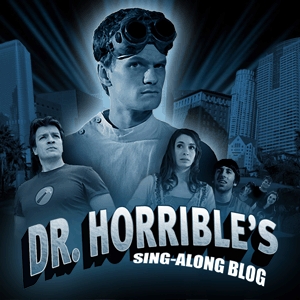
Dr. Horrible’s Sing-Along Blog is a short musical film about a super villain’s rise to power. The film consists of three acts, each about 14 minutes long, which were originally released online before being compiled for the DVD release. Dr Horrible was created by Joss Whedon, creator of several popular television shows including Firefly. The story focuses on Dr. Horrible’s efforts to be accepted into the elite criminal organization called the Evil League of Evil, and on the love triangle involving himself, a social worker named Penny, and Captain Hammer – his superhero nemesis.
This film is pure comedic genius from concept to execution. The songs are clever and well written. This film was produced independently, but looks professional. The writing team penned the musical during the WGA writers' strike. The idea was to create something small and inexpensive, yet professionally done, in a way that would circumvent the issues that were being protested during the strike. This effort was a success, and Joss Whedon has announced that a sequel is in the works.
Roleplaying
Because of my obsession with roleplaying games, I tend to watch most movies and shows with an eye for what I could take from it and apply to gaming. Here are some ideas from Dr. Horrible’s Sing-Along Blog.
Playing Villains: Dr. Horrible presents a villain who is relatable and appealing as a character. It would definitely not become the norm for me, but it makes me think it might be amusing to play a game where all of the player characters are villains. Necessary Evil, a setting for the Savage World RPG does this. Another fun idea would be to play a Star Wars campaign where all of the player characters are Sith in the Old Republic or Legacy Era.
Sing-Along Session: OK. Just once this has to happen. For one session of an ongoing game, everyone has to sing. Minor bits of dialog can be spoken, but the majority of it must be sung. That would be very entertaining.
Superman: Doomsday is a direct-to-video animated film about the supposed death of Superman. The story is loosely based on the comic book story arc: The Death and Return of Superman. The plot begins with Lex Luthor’s company, LuthorCorp, accidentally digging up an alien spaceship buried on earth thousands of years ago. The ship opens, releasing a creature called Doomsday, the ultimate killing machine. Doomsday was created as the ultimate soldier, but he couldn’t tell friend from foe so he was conveniently disposed of on Earth. Before long he makes his way to Metropolis where Superman must intervene.
Here is where the biggest mistake in the plot occurs. After a lengthy and brutal battle, Superman finally destroys Doomsday by grabbing him, flying him out into space, and then slamming him back down into the Earth. The reentry through the atmosphere and the final impact kill both Doomsday and Superman. Question: Once Superman got Doomsday beyond the Earth’s gravitational pull, why didn’t he simply hurl him into the sun? There was no indication that Doomsday could fly, so even if the sun didn’t kill him he would have no way of getting back to Earth. I guess Superman just didn’t think of that, which is why Superman will never be as cool as Batman. Batman would have thought of it.
After Superman’s death, we see a little of what the DC Comics universe would be like without him. Crime rates skyrocket, and super villains stalk Metropolis with no one to stop them. Lois Lane and Martha Kent mourn his passing. Then, as suddenly as he was gone, Superman returns. Digging his way out of his grave, he flies to Lois’ rescue as she faces death from the Toyman. All is not as it seems, however. It’s quickly revealed that Lex Luthor secretly removed Superman’s body from his grave and clone him. The returned Superman is actually Lex’s evil clone. For now he is impersonating Superman well, fighting crime and protecting the citizens of Metropolis, but at the same time he is doing the bidding of Lex Luthor.
While the clone Superman genuinely wants to protect Metropolis, he lacks the strong moral center of the original Superman. After seeing a news report that Toyman, one of Superman’s villains, has killed a small child, Superman kills the criminal instead of turning him over to the authorities. Lois Lane becomes suspicious and begins investigating Luthor. She discovers the true nature of the returned Superman, and that Lex is cloning an army of Supermen. The clone Superman has rid himself of Luthor’s control and destroys the unfinished clones along with the cloning facility. By now, however, the government has become concerned about Superman’s recent lack of discretion, and sends the military to apprehend him. The attempt is futile, of course, and it seems that the clone Superman’s reign of terror is unstoppable. Until… The REAL Superman returns from the grave. As it turns out Superman is truly invulnerable and he has merely been in a death-like coma while he’s been gradually recovering. After being resuscitated in his Fortress of Solitude, the real Superman flies to do battle with the clone Superman, and saves the day.
Other than that one HUGE error in the plot near the front of the film, the rest of the story is fairly interesting and coherent. The portrayal of Superman and the other characters was appealing, especially the clone Superman as a foil for the real Superman. Lois Lane almost did more in this movie than Superman actually did. The art was in the action-cartoon style typical of DC’s superhero cartoons. It wasn’t anything exceptional, but it wasn’t bad either. This movie was rated PG13, which is unusual for an animated superhero film. However, the action was quite brutal at parts, with a fair amount of onscreen animated blood. There was also some PG13 rated language that you wouldn’t expect in a Superman cartoon. This Superman may be animated, but it is definitely not a kids’ movie.
Roleplaying
Because of my obsession with roleplaying games, I tend to watch most movies and shows with an eye for what I could take from it and apply to gaming. Here are some ideas from Superman: Doomsday.
The Altruistic Villian: The clone of Superman genuinely believed that he was doing what was best for Metropolis, even in fighting the real Superman at the end. It reminded me of the value of the misguided villain, who wants to do good but goes about it the wrong way. I’ll have to use that archetype more when I’m the GM for a game.
The Danger of Being Invincible: Superman is one of those characters who, in my opinion, are just too powerful. Stories about Superman have a major weakness. The only way to effectively threaten Superman is to resort to a gimmick, like Kryptonite. This means that you either lose the tension in your story, or the gimmick gets old very fast. The only way this kind of character seems to work is if you plan for them to have only a finite story arc before moving on, such as the major villain whose one weakness the heroes must discover before they can finally destroy him. This isn’t so much inspiration for roleplaying, but rather a warning for GMs: Don’t let characters get too powerful if you expect to keep them around.


 Mouse Guard is a series of comic books published bi-monthly since 2006. The creator, writer, and artist for the series is David Petersen. Mouse Guard takes place in a fictional world where humans are absent, and mice have developed a medieval society of their own. They live in well fortified towns and villages built in under rocks or in the hollows of trees. The world is full of dangers for the mice, with the wild, untamed lands between their towns populated by such monsters as snakes and owls. To defend themselves from such predators, the Mouse Guard was formed. These brave warrior mice act as pathfinders and escorts, protecting other mice as they journey between towns.
Mouse Guard: Fall 1152 collects the first six issues of the comic into a single volume. The story begins when three Guardsmice, Saxon, Kenzie and Lieam, go in search of a mouse peddler who attempted a journey alone but never arrived at his destination. This simple search and rescue mission quickly puts them on the trail of a dangerous conspiracy to destroy the Guard.
This series reads like a mix a classic storybook and an epic fantasy novel. While the content is appropriate for all ages, this is not a children’s book. While the main characters are mice, the story presents well developed characters and a fully realized fictional setting. This is a tale of heroics, where it’s easy to root for the good guys. The fact that they are simple mice makes their humanity that much more poignant.
The art is an interesting aspect of this book. The art is well done. It’s not too cartoon-y. The mice have fairly realistic proportions, they just tend to stand on two legs, dress in capes, and wield swords. The illustrations are done in full-color and are beautifully painted. It’s a nice departure from typical comic book art, be it American or manga styles.
Roleplaying
Because of my obsession with roleplaying games, I tend to absorb most material with an eye for what I could take from it and apply to gaming. Here are some ideas from Mouse Guard: Fall 1152.
Mouse Guard Setting: Interrestingly, there is actually an official Mouse Guard RPG available. It uses the system of game mechanics from the Burning Wheel RPG. I own Burning Wheel but have never played it. I’m not sure if I want to buy the official RPG, but it might be interesting to play in the Mouse Guard setting.
The Guard: One of the things that I like about Mouse Guard is the role that the Guard plays as protectors and pathfinders. I think this could be an interesting role for players in any setting. It would work great in just about any fantasy setting, but also in sci-fi as well. The idea of a group of people defending isolated bastions of safety in a dangerous world creates a neat sense of adventure and camaraderie.
 About three years ago I spotted this book in a bookstore. The classic Japanese illustration on the cover jumped out at me as I walked past it. I bought it right then, but for some reason it’s taken me until just recently to finish reading it. It’s not that it isn’t interesting; I just kept getting distracted with other things.
Shinju is a historical mystery novel by Laura Joh Rowland. It’s based in Japan during the late 1600s, and follows the story of a police detective named Sano Ichiro as he investigates what appears to be a double suicide. He believes that the supposed lovers were actually murdered, and investigation soon produces evidence that this is true. In his pursuit of truth and justice, Ichiro faces many challenges that a modern detective would not encounter due to cultural restrictions and standards of propriety of the day. In the end, he discovers that the murders were just a small part of an intricate conspiracy with the ultimate aim of assassinating the shogun and starting a revolution.
Ichiro makes an interesting protagonist. He’s not just a detective but also a samurai, a man raised with martial training and a strong sense of duty. As a samurai, Ichiro is a man of action and a capable swordsman. His sense of duty is both a cause for inner conflict and a strong motivator for him. At first he almost determines to cease his investigations when his immediate superiors frown on his efforts. However, while his duty to them demands that he obey, he feels an even stronger duty to the pursuit of justice. Eventually he finds fulfillment when he discovers that his perseverance means the protection of the shogun, the highest lord to whom he owes his allegiance.
In reading this book I also learned some interesting things about ancient Japanese culture. When Ichiro wanted an autopsy of the dead man to determine the true cause of his death, he had to pursue it in secret because of the cultural taboo against cutting on dead bodies. One of the evidences against the original assumption that the two victims were lovers who had committed suicide together was the fact that the man was a known homosexual, and such a practice was socially accepted in Japan that long ago. It was also interesting to learn that the class distinctions of the day would allow a samurai to kill a commoner with little penalty, but murder of a samurai could result in execution. It was also interesting to learn about the arrangements imposed on the Japanese noblemen by the shogun in order to control them. All of the great landowners were required to maintain a luxurious estate in the capitol in addition to their estates on their own land. They were also required to keep their families there in the capitol. This meant that if they attempted to rebel the shogun could hold their families hostage and seize their properties in the city.
Overall, it was a very interesting read. Ichiro was an intelligent man, a skilled warrior, and a man of some character. The plot remained interesting from beginning to end, with the stakes gradually rising as the investigation progressed so that the excitement continued to mount.
Roleplaying
Because of my obsession with roleplaying games, I tend to absorb most material with an eye for what I could take from it and apply to gaming. Here are some ideas from Shinju.
Cultural Elements in Setting: The setting of historical Japan contributed a lot to the conflicts and complications of this story. It might be fun to play a game set in this period. I’ve never played a game where the setting gave much attention to cultural quirks and class distinctions. This story demonstrated that such elements can be powerful elements for bringing characters to life.
Mystery: I’ve played a couple of games where mystery was an element of the plot. In the game InSpectres, the player characters solve mysteries, but the solution to the mystery is provided by the players themselves. In the game Dogs in the Vineyard, the player characters have to investigate the goings-on of each town they visit, but the focus is less on solving mysteries and more on finding solutions to complex moral dilemmas. A game where the player characters investigate a mystery with the simple goal of discovering who-done-it and bringing that person to justice could be an interesting experience, though it would require careful attention from the GM to create a believable mystery with just the right amount of clues so that it is neither too easy to solve nor impossible to overcome.
It has yet to happen in any of the games I’ve played in or game mastered, but most game systems do provide for the possibility that a player’s character (PC) might die. Many games give characters hit points to measure their staying power in battle, and when those hit points are depleted they might die. Some games measure the number, and severity, of wounds a character receives with too many wounds resulting in death. Other games have other systems for injury and character death.
Some games, however, make PC death all but impossible. Often times, even when the system provides rules for character death, there is an understanding among the players and the GM that the GM will not “let” the PCs die. The reason for this is that players spend time creating a character and then developing that character in play. They become invested in their character through this process and don’t want to see them die. Taking this into consideration, it might seem reasonable that the death of a PC should be off limits. However, is anything lost by disallowing player character death?
Imagine your PC facing down the greatest foe they’ve ever encountered. The thrill of danger raises the hair on the back of your neck. The treat of death gets the adrenaline pumping through your veins. Then, you remember that there is really no danger at all. The GM won’t possible let your PC die. Defeat will mean, at worst, a temporary setback. The moment is lost. What should be an epic contest of cunning, will and might becomes a mundane exercise in rolling dice and comparing numbers. Success is only a matter of time. Even if you fail this confrontation, you know that your character will live to fight another day.
So, how could you maintain the thrill of risking PC death, without frustrating players who have become invested in their characters? Here are a couple of options:
Players Choose When to Risk Death: In the game Dogs in the Vineyard, the system allows for PC death, but the players choose when the stakes warrant the risk of death. Players always have the option to back down from any conflict as soon as they decide that the issue isn’t worth risking their PC’s life. This means that the risk of death is very real when the players decide to give a conflict their all, and they’re up against suitable opposition. But if the players, or their characters, don’t really care about the issues at hand they’re never forced to take that risk. This means that if a PC dies, at least it will be over a matter that their player deemed dramatically appropriate.
Quick Character Creation: Some games have a very simple process for creating PCs. This means that if your PC dies, it’s only a matter of minutes to create the game stats for a new one. This takes some of the bite out of PC death. Of course, it might take longer than a few minutes for players who really want an intricate back story for their character. One drawback to this approach is that it tends to encourage cardboard cutout characters. Players spend less time developing their characters in the initial process and don’t become as invested in their stories.
Multiple Characters for Each Player: At the beginning of the game, each player could create two or three characters. They might play one primarily, with any others having only minor support rolls in the story. However, if their primary character should die, they already have another waiting to step up and take their place. This is a character they’ve already invested some time in, and has already had some minor involvement in the story. By spreading your investment into multiple characters, the loss of one of them seems like less of a tragedy, but it does require more effort up front to develop multiple characters.
What do you think about PC death? Should PCs have to face the threat of death, or should they be immune except at the choice of their player. If PCs do risk death, what would be a good way to mitigate some of the pain of losing your character?
 This is a belated review as I saw Steam Boy most recently almost a month ago. Steamboy is an anime movie directed and co-written by Katsuhiro Otomo, who directed the anime film Akira (I’ve never seen it, but it’s famous). Steamboy is pretty much my only exposure to the steampunk subgenre of science fiction.
The story focuses on a family of scientists in Victorian England who develop incredible steam powered inventions. James Ray Steam’s father, Edward, and grandfather, Lloyd, are working together on a secret project in America, but they split ways after an accident that leaves Edward severely injured from a blast of steam. A short time later, back in England, James receives a mysterious package from his grandfather. The package contains a steel ball, about the size of a basketball, and a letter from his grandfather telling him to protect it from a company called the O’Hara Foundation. Only a short while later, agents of the Foundation attack James’ house in an attempt to steal the Steamball, which contains super-compressed steam, thus launching an action-packed thrill ride as everyone battles for this new energy source. The O’Hara Foundation, now allied with James’ father, wants it to power new military weapons that they aim to sell to any nation who can afford them. The British government want it for their own ends. James simply wants to make sure that his family’s invention is used for good and not evil.
The movie had good animation, with lots of computer enhanced art. The character designs were somewhat bland to my eye, but were clean and a little more on the realistic side of anime. Overall, the movie reminded me a bit more of Disney-style animation than of typical anime. One of the most interesting visual aspects of the movie was the mechanical designs. The high-tech vehicles were steam-powered and looked like something that could come from the industrial revolution. I especially liked how they used series of moving magnifying lenses to mimic the functions of cameras and video screens. The only major drawback to the art that I noticed was that many of the interior scenes seemed very dark, which made it difficult to really appreciate the interesting interiors of some of the buildings.
The music score was OK, but not really exceptional. The voice acting for both the original Japanese language track and the English dub were good, and the English dub featured the voices of some well known actors including Anna Paquin, Patrick Stewart, and Alfred Molina. In some parts, though, the voices seem a bit overwhelmed by the music and sound effects. It would have been nice if they hade made the dialog track just a bit louder.
Overall, it is an interesting movie. It has good quality animation and some neat ideas. One minor detail of the film that I really enjoyed was the credits. As the credits roll at the end of the film, a slideshow plays in the background that gives hints to how the story might continue, with James Ray Steam using his steam-powered gadgets to become a high flying war hero.
Roleplaying
Because of my obsession with roleplaying games, I tend to watch most movies and shows with an eye for what I could take from it and apply to gaming. Here are some ideas from Steamboy.
Alternate History: Steamboy presents an alternate history in which the Victorian era achieves technology far in advance of the real industrial revolution. I know I’ve seen other examples of this, and it’s a fun creative exercise to ask what history might have been like if certain scientific discoveries were made earlier. Using this in an RPG could be a neat way to add a little different flavor to the typical Sci-Fi game.
Family Conflicts: Most of the story in Steamboy revolves around three generations of scientists in the same family, with two of them ending up on opposing sides of the main conflict, and the youngest one having to choose which one to follow. I’ve used family connections to add to the drama in Dogs in the Vineyard, but it might be interesting to use this tactic more often in other games.
Today I’m starting a new series of articles I would like to continue to publish on a weekly basis. The object of this series is an exercise in creative setting and plot building. I got the idea from a role-playing game product called Instant Game, by Animalball Partners, which is available as a free PDF download here. One of the things Instant Game provides is a system for rolling on a series of charts to randomly select setting and plot elements. The GM and the players are then supposed to connect the dots and turn these elements into a playable game. I thought doing this would be a good way to get the creative juices flowing.
So, here are the setting elements I rolled today:
Setting: Institution/Institutionalized
Tone: Swashbuckling
Things: Mecha, Crash Site
Tech Level: Artificial Intelligence
Place: Ruins
And here are the plot elements I rolled:
Opposition: Political Group
Plot Action: Infiltrate (Illusory) Blood
Plot Action: Rescue (Ancient) Child
Alright, before you read further, I challenge you to take 10-20 minutes to develop these elements into a workable fictional setting and plot, and post your results in the comments below. After you’re done, you can come back and read my interpretation of these elements.
My Weekly World: Musketeers 2201
Civilization as we know it ended in 2101, when Earth was struck by a rain of meteors. This left much of the world devastated and in ruins. Out of the ashes of this disaster civilization arose anew. Today much of the surviving humans are united under one king. The king’s most loyal retainers are brave and gallant soldiers who pilot giant, gun-wielding mecha called Muskets. These Musketeers receive expert training at the renowned Musketeers Academy, built at the crash site of the largest meteor, where they spar with both steel and wits.
The most accomplished recent graduates of the academy receive a special mission. Rumor has it that a secret society of noblemen, calling themselves the High Bloods, is hatching a plot against the king. No one has been able to identify any of the members of this group as of yet. The Musketeers are to pose as political dissenters and attempt to infiltrate the High Bloods. Following clues around the world, most of their leads end up as dead ends. However, while exploring some dangerous ruins rumored to be the hideout of a High Bloods cell, they discover a young child who has been in stasis since before the disaster. As the child gradually shares knowledge of the old world, the Musketeers begin to suspect that the High Bloods do not exist at all, but are in fact a lie propagated by androids who survived the meteor shower in secret. The High Blood conspiracy was a ploy to misdirect the attention of the king and his Musketeers while the androids prepared to launch a massive offensive against the kingdom.
Yeah, it’s a bit convoluted, but what do you think?
Back in November, I said that my weekly time log posts would become monthly time log posts, and I haven't posted about my time log project since. Well, I've still been logging how I use my time, and I thought I'd post an update regarding the month of February.
Last month I spent 130 hours on theocratic activities. That includes 94 hours working with the RBC #10 in Oviedo. I'm really happy that my time spent on theocratic activities has moved to first place (after sleep that is).
Next I spent 76.5 hours on secular work. With the holiday season well behind us my work as dropped to part time hours, which I'm fine with for now. I had been hoping to gain full-time employment this year, but I've changed my attitude somewhat and am planning on putting off working full-time in favor of trying to regular pioneer.
I spent 34 hours reading. That isn't entirely accurate. Because a lot of my "work" with the RBC involves waiting around for materials to be delivered, I actually spent quite a few hours reading while I was there. These 34 hours represent time devoted solely to reading.
Creative pastimes, such as working on this blog and my wiki, creative writing, art, game design, and RPG prep, received 47 hours of my time. I'm pretty happy with that. I don't feel like that's an exorbitant amount of time, and I think I've accomplished a fair amount on my various projects.
Entertainment took up another 47 hours. This includes watching movies and shows, playing card games, board games, role-playing games, and sports.
Lastly, I spent 5.5 hours on housework, errands, and shopping.
Overall, I'm very happy with how I spent my time last month. I'm actually very happy with my life in general. Not that everything is going perfectly, but for the first time in a long time I feel like I'm right where I need to be in life, doing what I need to be doing. And that makes the bumps in the road a lot easier to put up with.
 Not long ago I purchased the entire collection of Batman: The Animated Series. I recently finished watching the first volume, or season, of the show. The show first aired in 1992 to 1995. I watched it as a kid, and it definitely shaped my perception of the Batman character growing up. It’s interesting watching it again so many years later, and noting how many episodes I still remember.
The cartoon has a very distinct animation style. The art is very dark, minimalist, and stylized. Having grown accustomed to watching recent anime, it was a bit of a shock seeing American cartooning from the 90s. At first it seemed really crude. After awhile though, I’ve come to appreciate the simplicity of it. The animation tells the stories adequately and occasionally exceeds my expectations. I like how they combine Batman’s sci-fi elements with a sense of nostalgia. The cars, buildings, and clothing are styled after the fashions of the 1940s. All television and computer screens are black and white. I like the title cards at the beginning of each episode, which mimic the style of old movies. The music has a dark, theatrical style, and is pretty good, but lacking much variation in style. The whole thing has a certain amount of film-noir inspired style to it.
The writing for this show is the greatest point in its favor. So far, each episode has held my interest, with none of them coming across as boring or repetitive. A few have struck me as really well written, but I’ll mention just two specifically.
“Heart of Ice” introduces the character of Mr. Freeze to the series, and put a new spin on his back-story that turned him from a stereotypical mad scientist into a tragic character motivated by vengeance for a lost love. This episode won the show an Emmy for Outstanding Writing in an Animated Program.
“Joker’s Favor” is about an average family man named Charlie who runs afoul of the Joker by cursing him out on the busy highway after a bad day at work. After pleading for his life, the Joker spares him in exchange for a favor to be performed at some later date. Two years later, Charlie has changed his name and moved him and his family out of Gotham, but the Joker has been keeping track of him for these past two years and is ready to collect on the favor owed. This episode introduced the Joker’s sidekick Harley Quinn for the first time in any medium, and featured one of the best plot twists at the end of any episode in volume one.
Roleplaying
Because of my obsession with roleplaying games, I tend to watch most movies and shows with an eye for what I could take from it and apply to gaming. Here are some ideas from Batman: The Animated Series.
Recent History Setting: Batman: TAS is interesting in how they portray the setting, mimicking the styles of the 1940s while being very vague about the actual year(s) in which the story is set. I’ve played in modern settings, sci-fi settings, and a host of other universes, but I’ve never played a game set in recent history. That might be interesting, depending on the type of game.
Rogues Gallery: One of the fun things about Batman: TAS is the recurring villains. Not every episode features one of Batman’s more recognizable foes, but it is fun to watch them escape Arkham and hatch new plots against Gotham City and Batman. The nice thing about recurring villains is that they carry certain themes with them, and you can often identify the mastermind behind a particular crime by the nature of the crime or the way it was committed, before the criminal is even revealed on-screen. It allows you to set certain expectation for the audience/players, and either reward them for paying attention or surprise them with a twist.
 Origin: Spirits of the Past is something of a misnomer for this anime feature film. The story has little to do with the origin of anything and it contains no spirits. The original Japanese title for the film is Gin-iro no Kami no Agito, which literally translates to Agito the Silver-Haired, and makes a lot more sense for this movie.
The story takes place 300 years in the future. Scientists experimenting with genetically engineered plants on the moon accidentally unleashed a new species of intelligent plant-life that shattered the moon and traveled to the Earth. This caused a disaster that wiped out civilization as we know it and covered much of the planet with a dangerous living forest. The surviving humans that appear in the movie are split into two different factions. The inhabitants of Neutral City try to adapt to life after the apocalypse and live in harmony with the forest, while the militaristic nation of Ragna wants to return the planet to the way it was before.
The main character is a boy named Agito. His father helped build Neutral City. While trespassing in the forest Agito discovers Toola, a girl from before the disaster, frozen in a stasis cell. He wakes her up and brings her back to the city. It turns out that she happens to be the daughter of the scientist who developed the new plant-life. The scientist also built a failsafe device that could destroy the new forest, and Ragna wants Toola’s cooperation in activating that device. Before long, Agito asks the forest for aid in rescuing Toola from Ragna. The forest grants him some of its power, turning him into a silver-haired, “enhanced” human with incredible strength and speed. That’s where the Japanese title comes in.
Overall, this was a pretty cool sci-fi flick. The story is rather spotty at parts, and there wasn’t really enough time for any significant character development, but the setting was pretty intriguing. It reminded me a bit of a post-apocalyptic setting of my own that I’ve been tossing around in my head for a while. While the soundtrack was nothing special, the animation was superb. It was every bit of the level of sophistication and beauty I’ve come to expect from Gonzo. Some of the visuals were thoroughly amazing from their concept to their execution. The intro sequence shows an awesome looking plant-dragon creature descending on the Earth. The scenes around Neutral City and deep in the forest are cool too. You can see how the artists took familiar modern locales such as malls and movie-theaters, turned them over, aged them, and covered them in overgrowth to create a unique and compelling image of a post-apocalyptic jungle. The mecha designs for Ragna’s army were neat too. Their tech had a lot of style, but with an air of industrialist practicality. I wouldn’t call this one of my favorite movies, but it is definitely pretty, and it presents a lot of ideas to mine for my own projects.
Roleplaying
Because of my obsession with roleplaying games, I tend to watch most movies and shows with an eye for what I could take from it and apply to gaming. Here are some ideas from Origin: Spirits of the Past.
Post-Apocalyptic Setting: As I mentioned above, I’ve been tossing around some ideas for a post-apocalyptic setting of my own for about 3 or 4 years now. I’d love to develop an RPG off of this setting, and I think I just recently decided on what system to use with that project so I might actually begin work on it sometime soon. The two different factions in this movie relate very well to two of the factions I had in mind for my setting, and I’ll probably borrow some specific ideas from the film.
Building a City in the Darkness: I could almost picture an RPG about Agito’s father and the other pioneers who built Neutral City as a bastion of safety in a dangerous world. I think it would be cool to play a game where the PCs have to fortify a safe haven against the perils that encroach from all sides. The idea is to encourage the players to get invested in a locale rather than to be just passing through. A game like this could work in a huge variety of settings from fantasy to science fiction or anything in between.
Batman: Gotham Knight is the second Batman film in my DVD collection. It is an anime follow-up to Batman Begins, taking place before the events of The Dark Knight. The film runs a little over an hour and consists of six different animated shorts. Each short was written, produced, and animated by different people, but there are a considerable number of connections between them. In fact, having seen it a second time, I was actually surprised just how connected the six segments are. It could almost be one continuous story. Overall I liked the anime pretty well, but I’ll review each segment separately below.
“Have I Got a Story for You”
This segment has three kids telling about their encounters with the Batman in reverse-chronological order. Each story presents a different idea of what exactly Batman is in the eyes of those who witness him. This was an interesting idea, but I think it was an oversight to have the story take place in the daylight. It makes it harder to believe that the kids would mistake him for anything but what he is – a man in a suit – and besides, we know Bruce doesn’t operate as Batman during the day. The animation in this one wasn’t necessarily bad, but it was my least favorite. I just don’t care for the style.
“Crossfire”
This segment focuses on two detectives who are working closely under Gordon in Gotham PD’s new Major Crimes Unit. It connects with the previous segment by having these two cops take the bad guy that the kids witnessed Batman fight down to Arkham. It introduces Sal Maroni and The Russian, two rival mob bosses who will appear again in later segments. While dropping off the captured villain, the two cops argue about whether Batman is good for the city. One of them doesn’t trust Batman, the other does. On their way back from Arkham, they get caught in the crossfire of a street fight between the rival crime gangs and are rescued by Batman.
“Field Test”
Lucius Fox invents a new device for Batman’s arsenal. It generates an electro-magnetic pulse at the sound of a gunshot that will deflect bullets. Armed with this new tool, Batman forces Sal Maroni and The Russian together and then takes on both of them at once. This segment featured some of my favorite animation, including my favorite version of the bat-suit presented in this film. It was a unique and original design, without radically altering the basic concept. The story was also pretty interesting. It’s neat how Batman deals with the rival crime bosses, and the story also gives a good reason why Batman doesn’t have his “invincibility device” in future stories. Early in the segment, Bruce Wayne steals a PDA that will come into play in the last segment. Near the end of this segment a thug tosses his pistol into a gutter, which will come up again in the segment “Working Through Pain”.
“In Darkness Dwells”
The police respond to a riot in a cathedral where a cardinal was kidnapped by the villain Killer Croc. Batman meets with Gordon and the two cops from “Crossfire” before heading into the sewers in pursuit of the kidnapper. After a brief fight with Croc, he stumbles upon a cult of drugged lunatics following Scarecrow. Batman must prevent them from killing the cardinal. Nothing about this segment really stands out to me as note-worthy, though it wasn’t bad. It seemed a bit like a filler episode.
“Working Through Pain”
Picking up right after the last segment, Batman is still in the sewers trying to round up a few members of the Scarecrows cult. One of these shoots him in the stomach. As batman struggles against the pain of the injury, trying to get out of the sewers, he experiences flashbacks to previous experiences. Most of these revolve around his training under a woman named Cassanda, who taught Bruce a meditative technique for mastering pain. This segment has my favorite anime depiction of Bruce from this film. At the end, Batman discovers a cache of weapons in the sewers, a link to the earlier “Field Test” segment. Warning: This anime has some amount of blood throughout, but this particular segment has the goriest visuals, including an animated depiction of surgery being performed on a man without anesthesia. It’s probably not appropriate for children or those with weak stomachs.
“Deadshot”
A skilled assassin called Deadshot scores a contract to take out Gordon. Batman follows Gordon’s motorcade trying to intercept the killer. Early on, we see the cache of weapons Batman pulled out of the sewers in the last segment, and there are also several connections to the earlier “Field Test” segment. This story provides an interesting twist: Deadshot is really out to kill Batman and the threats against Gordon are just a means to flush him out. In my opinion, though, it fails to really address the significance of this. It’s the criminal underworld’s first direct counterstrike against the Batman, acknowledging him as their chief persecutor.
All together, I think Batman: Gotham Knight is a pretty entertaining watch. As an aspiring artist, and someone who watches a lot of animation, I enjoyed seeing the variety in the artwork. Most of it was very high-quality, even if all of it wasn’t to my taste. If you're interested, you can find a very good sampling of the artwork in this film here.
Roleplaying
Because of my obsession with roleplaying games, I tend to watch most movies and shows with an eye for what I could take from it and apply to gaming. Here are some ideas from Batman: Gotham Knight.
Making Connections: I liked how each segment of this film told its own story. But, they also made connections between the segments that an observant viewer could follow. This reminded me a lot of how RPG sessions can tend to be episodic sometimes, but even in that case a GM should try to make little connections here and there.
Eyewitnesses: In the first segment it was interesting how three different people give very different accounts of the same person. I think I ought to use that in a game sometime where the PCs are investigating an NPC that none of them have encountered yet.
Flashbacks: The segment “Working Through Pain” makes good use of flashbacks. In fact, most of the story in that segment takes place in the flashbacks. I’ve never tried incorporating flashbacks into an RPG, but I think it could be cool if it were done well.