
 Posts
Posts


 X-Men Origins: Wolverine is a prequel to the X-Men movie trilogy explaining the origins of the character known as Logan or Wolverine. The majority of the story takes place 10-20 years before the events of the first X-Men film. The movie explains the relationship between Logan and Sabretooth, shows Logan’s involvement with Colonel Stryker and the Weapon X program, and reveals how Logan lost his memories. One minor detail I enjoyed was an explanation for why Logan adopted the name Wolverine.
I went into the movie expecting a lot of action and only enough story to link the various action scenes together. I was pleasantly surprised that the movie had a fairly good plot with a couple of twists and surprises throughout. The writing and acting was pretty good, and the casting was well done. Hugh Jackman reprises his role as Wolverine, and his portrayal of the character was spot on. While the movie featured a number of new characters, for me the most memorable was Wade Wilson portrayed by Ryan Reynolds. The only character I was somewhat disappointed with was Gambit. In the film he didn’t have enough of a Cajun accent to do the character justice.
My biggest complaint against the film is the special effects. Some of the effects were so obviously fake it was distracting. The most notable example I recall is when Sabretooth drags his claws along the hood of a truck and rends the metal as he goes. The tears in the metal were very obviously drawn in.
Overall, the movie delivered exactly what I expected and a little bit more. I’d say it was about on par with X2 in pretty much all respects. I wouldn’t mind seeing the sequel or the Deadpool spin-off, both of which have already been confirmed as in-production.
Roleplaying
Because of my obsession with roleplaying games, I tend to watch most movies and shows with an eye for what I could take from it and apply to gaming. Here’s an idea from X-Men Origins: Wolverine.
Playing an Origin Story: When playing a long running RPG campaign, it could be fun to take a session or two to explore each character’s origins. This would especially be true in playing a superhero RPG, but it could really work in any RPG that brings a number of characters with very different and involved backgrounds together. I think you would want to play a few sessions first in the setting’s “present”, but then periodically play a session as sort of a “flashback”. During such origin stories, the other players could take on the roles of new characters that are important to the featured character’s background. It could be an opportunity for character development and a chance for everyone to try something a little different.
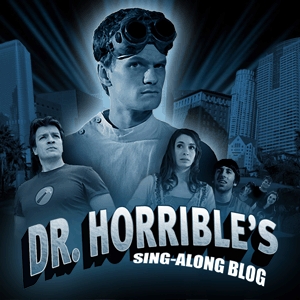
Dr. Horrible’s Sing-Along Blog is a short musical film about a super villain’s rise to power. The film consists of three acts, each about 14 minutes long, which were originally released online before being compiled for the DVD release. Dr Horrible was created by Joss Whedon, creator of several popular television shows including Firefly. The story focuses on Dr. Horrible’s efforts to be accepted into the elite criminal organization called the Evil League of Evil, and on the love triangle involving himself, a social worker named Penny, and Captain Hammer – his superhero nemesis.
This film is pure comedic genius from concept to execution. The songs are clever and well written. This film was produced independently, but looks professional. The writing team penned the musical during the WGA writers' strike. The idea was to create something small and inexpensive, yet professionally done, in a way that would circumvent the issues that were being protested during the strike. This effort was a success, and Joss Whedon has announced that a sequel is in the works.
Roleplaying
Because of my obsession with roleplaying games, I tend to watch most movies and shows with an eye for what I could take from it and apply to gaming. Here are some ideas from Dr. Horrible’s Sing-Along Blog.
Playing Villains: Dr. Horrible presents a villain who is relatable and appealing as a character. It would definitely not become the norm for me, but it makes me think it might be amusing to play a game where all of the player characters are villains. Necessary Evil, a setting for the Savage World RPG does this. Another fun idea would be to play a Star Wars campaign where all of the player characters are Sith in the Old Republic or Legacy Era.
Sing-Along Session: OK. Just once this has to happen. For one session of an ongoing game, everyone has to sing. Minor bits of dialog can be spoken, but the majority of it must be sung. That would be very entertaining.
Superman: Doomsday is a direct-to-video animated film about the supposed death of Superman. The story is loosely based on the comic book story arc: The Death and Return of Superman. The plot begins with Lex Luthor’s company, LuthorCorp, accidentally digging up an alien spaceship buried on earth thousands of years ago. The ship opens, releasing a creature called Doomsday, the ultimate killing machine. Doomsday was created as the ultimate soldier, but he couldn’t tell friend from foe so he was conveniently disposed of on Earth. Before long he makes his way to Metropolis where Superman must intervene.
Here is where the biggest mistake in the plot occurs. After a lengthy and brutal battle, Superman finally destroys Doomsday by grabbing him, flying him out into space, and then slamming him back down into the Earth. The reentry through the atmosphere and the final impact kill both Doomsday and Superman. Question: Once Superman got Doomsday beyond the Earth’s gravitational pull, why didn’t he simply hurl him into the sun? There was no indication that Doomsday could fly, so even if the sun didn’t kill him he would have no way of getting back to Earth. I guess Superman just didn’t think of that, which is why Superman will never be as cool as Batman. Batman would have thought of it.
After Superman’s death, we see a little of what the DC Comics universe would be like without him. Crime rates skyrocket, and super villains stalk Metropolis with no one to stop them. Lois Lane and Martha Kent mourn his passing. Then, as suddenly as he was gone, Superman returns. Digging his way out of his grave, he flies to Lois’ rescue as she faces death from the Toyman. All is not as it seems, however. It’s quickly revealed that Lex Luthor secretly removed Superman’s body from his grave and clone him. The returned Superman is actually Lex’s evil clone. For now he is impersonating Superman well, fighting crime and protecting the citizens of Metropolis, but at the same time he is doing the bidding of Lex Luthor.
While the clone Superman genuinely wants to protect Metropolis, he lacks the strong moral center of the original Superman. After seeing a news report that Toyman, one of Superman’s villains, has killed a small child, Superman kills the criminal instead of turning him over to the authorities. Lois Lane becomes suspicious and begins investigating Luthor. She discovers the true nature of the returned Superman, and that Lex is cloning an army of Supermen. The clone Superman has rid himself of Luthor’s control and destroys the unfinished clones along with the cloning facility. By now, however, the government has become concerned about Superman’s recent lack of discretion, and sends the military to apprehend him. The attempt is futile, of course, and it seems that the clone Superman’s reign of terror is unstoppable. Until… The REAL Superman returns from the grave. As it turns out Superman is truly invulnerable and he has merely been in a death-like coma while he’s been gradually recovering. After being resuscitated in his Fortress of Solitude, the real Superman flies to do battle with the clone Superman, and saves the day.
Other than that one HUGE error in the plot near the front of the film, the rest of the story is fairly interesting and coherent. The portrayal of Superman and the other characters was appealing, especially the clone Superman as a foil for the real Superman. Lois Lane almost did more in this movie than Superman actually did. The art was in the action-cartoon style typical of DC’s superhero cartoons. It wasn’t anything exceptional, but it wasn’t bad either. This movie was rated PG13, which is unusual for an animated superhero film. However, the action was quite brutal at parts, with a fair amount of onscreen animated blood. There was also some PG13 rated language that you wouldn’t expect in a Superman cartoon. This Superman may be animated, but it is definitely not a kids’ movie.
Roleplaying
Because of my obsession with roleplaying games, I tend to watch most movies and shows with an eye for what I could take from it and apply to gaming. Here are some ideas from Superman: Doomsday.
The Altruistic Villian: The clone of Superman genuinely believed that he was doing what was best for Metropolis, even in fighting the real Superman at the end. It reminded me of the value of the misguided villain, who wants to do good but goes about it the wrong way. I’ll have to use that archetype more when I’m the GM for a game.
The Danger of Being Invincible: Superman is one of those characters who, in my opinion, are just too powerful. Stories about Superman have a major weakness. The only way to effectively threaten Superman is to resort to a gimmick, like Kryptonite. This means that you either lose the tension in your story, or the gimmick gets old very fast. The only way this kind of character seems to work is if you plan for them to have only a finite story arc before moving on, such as the major villain whose one weakness the heroes must discover before they can finally destroy him. This isn’t so much inspiration for roleplaying, but rather a warning for GMs: Don’t let characters get too powerful if you expect to keep them around.

 Mouse Guard is a series of comic books published bi-monthly since 2006. The creator, writer, and artist for the series is David Petersen. Mouse Guard takes place in a fictional world where humans are absent, and mice have developed a medieval society of their own. They live in well fortified towns and villages built in under rocks or in the hollows of trees. The world is full of dangers for the mice, with the wild, untamed lands between their towns populated by such monsters as snakes and owls. To defend themselves from such predators, the Mouse Guard was formed. These brave warrior mice act as pathfinders and escorts, protecting other mice as they journey between towns.
Mouse Guard: Fall 1152 collects the first six issues of the comic into a single volume. The story begins when three Guardsmice, Saxon, Kenzie and Lieam, go in search of a mouse peddler who attempted a journey alone but never arrived at his destination. This simple search and rescue mission quickly puts them on the trail of a dangerous conspiracy to destroy the Guard.
This series reads like a mix a classic storybook and an epic fantasy novel. While the content is appropriate for all ages, this is not a children’s book. While the main characters are mice, the story presents well developed characters and a fully realized fictional setting. This is a tale of heroics, where it’s easy to root for the good guys. The fact that they are simple mice makes their humanity that much more poignant.
The art is an interesting aspect of this book. The art is well done. It’s not too cartoon-y. The mice have fairly realistic proportions, they just tend to stand on two legs, dress in capes, and wield swords. The illustrations are done in full-color and are beautifully painted. It’s a nice departure from typical comic book art, be it American or manga styles.
Roleplaying
Because of my obsession with roleplaying games, I tend to absorb most material with an eye for what I could take from it and apply to gaming. Here are some ideas from Mouse Guard: Fall 1152.
Mouse Guard Setting: Interrestingly, there is actually an official Mouse Guard RPG available. It uses the system of game mechanics from the Burning Wheel RPG. I own Burning Wheel but have never played it. I’m not sure if I want to buy the official RPG, but it might be interesting to play in the Mouse Guard setting.
The Guard: One of the things that I like about Mouse Guard is the role that the Guard plays as protectors and pathfinders. I think this could be an interesting role for players in any setting. It would work great in just about any fantasy setting, but also in sci-fi as well. The idea of a group of people defending isolated bastions of safety in a dangerous world creates a neat sense of adventure and camaraderie.
A day late but not a dollar short! Here’s this week’s weekly world.
Here are the setting elements:
Setting: Space Colony
Tone: Swashbuckling
Things: Advanced Intelligence, Grudge
Tech Level: Low Magic
Place: River
And here are the plot elements:
Opposition: Warlord
Plot Action: Convince (Malignant) Advanced Intelligence
Plot Action: Duel (Healthy) Heist
Again, before you read further, I challenge you to take 10-20 minutes to develop these elements into a workable fictional setting and plot, and post your results in the comments below. After you’re done, you can come back and read my interpretation of these elements.
My Weekly World: Contact Station
In the distant future, an Earth space colony orbits the planet Jai’ju’bal where humans have discovered their first intergalactic neighbors. The Jai’juls are a primitive people. Their civilization is ancient, but a history of frequent warfare and natural disasters has prevented them from progressing beyond the iron age. Human scientists and diplomats prepare for first contact, having observed the Jai’buls for some time from a distance.
However, their plans for a peaceful introduction might be derailed when a xenoarcheologist decides to make an unapproved landing mission to Jai’ju’bal. His goal is to infiltrate an ancient temple built at the mouth of Jai’ju’bal’s largest river and steal valuable artifacts. Earth Force commanders discover the plot shortly after he leaves the space colony, and they dispatch a squad of daring space marines to intercept him before he can do any damage.
Things go awry when the presence of the humans in the ancient temple awakens an immortal alien warlord who had been imprisoned there. Lord Darkrul, a highly evolved Jai’jul mutant, possesses superior mental powers that the superstitious natives attribute to magic. Lord Darkrul begins again his campaign for world domination, seething with anger for the years he’s been imprisoned.
In an attempt to right their mistake, the human xenoarcheologist and space marines devise a plan to defeat the Jai’jul warlord. After evacuating the space colony, they convince Lord Darkul that a being of his power shouldn’t be content to rule from a terrestrial throne, but should rule from the heavens. They lure him to their space colony and then blow it up, destroying Darkul once and for all, and barely escaping in the process.
What do you think? Be sure to post your own take on the elements in the comments if you haven't already.